


I’ve advised some of the wealthiest people in the world on Wall Street. And I can tell you that wealth creation doesn’t come from:
A single investment
A sale
Or a lucky break
It doesn’t come from a single decision. It comes from stacking smaller decisions that are made deliberately and held over long periods of time.
So here are 10 wealth decisions that rich people make and you probably don’t know about:
1/ Delay taxable events.
Most people only look at the tax rate.
But wealthy people look at the moment the bill is created because tax is only owed once something happens that triggers it.
This is why they’re always asking two questions:
How much tax they’ll owe (the rate)
When the tax bill gets triggered (the timing)
For example: selling a property for a profit triggers the tax event, but holding or borrowing against it doesn’t.
This is why wealthy people:
Hold assets longer: A gain only gets taxed when you sell. If you keep the asset, the gain only stays on paper and no tax bill arrives.
Use exchanges: A 1031 exchange lets you sell an investment property and roll the money into replacement property within a defined timeframe. This means the capital gains tax is deferred.
Use deferral structures: This is any legal arrangement that lets you push your tax bill to a later date.
In short, they’re planning for the transaction before the gain is realized, not after.
Because every year you legally push the tax bill back, your money keeps compounding for you.
2/ Borrow against assets.
When you need cash fast, selling your assets shouldn’t be your first move.
Because the moment you sell, you’re triggering a gain and a taxable event. This not only stops your asset from compounding, but it also means you’re paying the tax bill.
No bueno.
Instead, the wealthy borrow against their assets when they need access to cash.
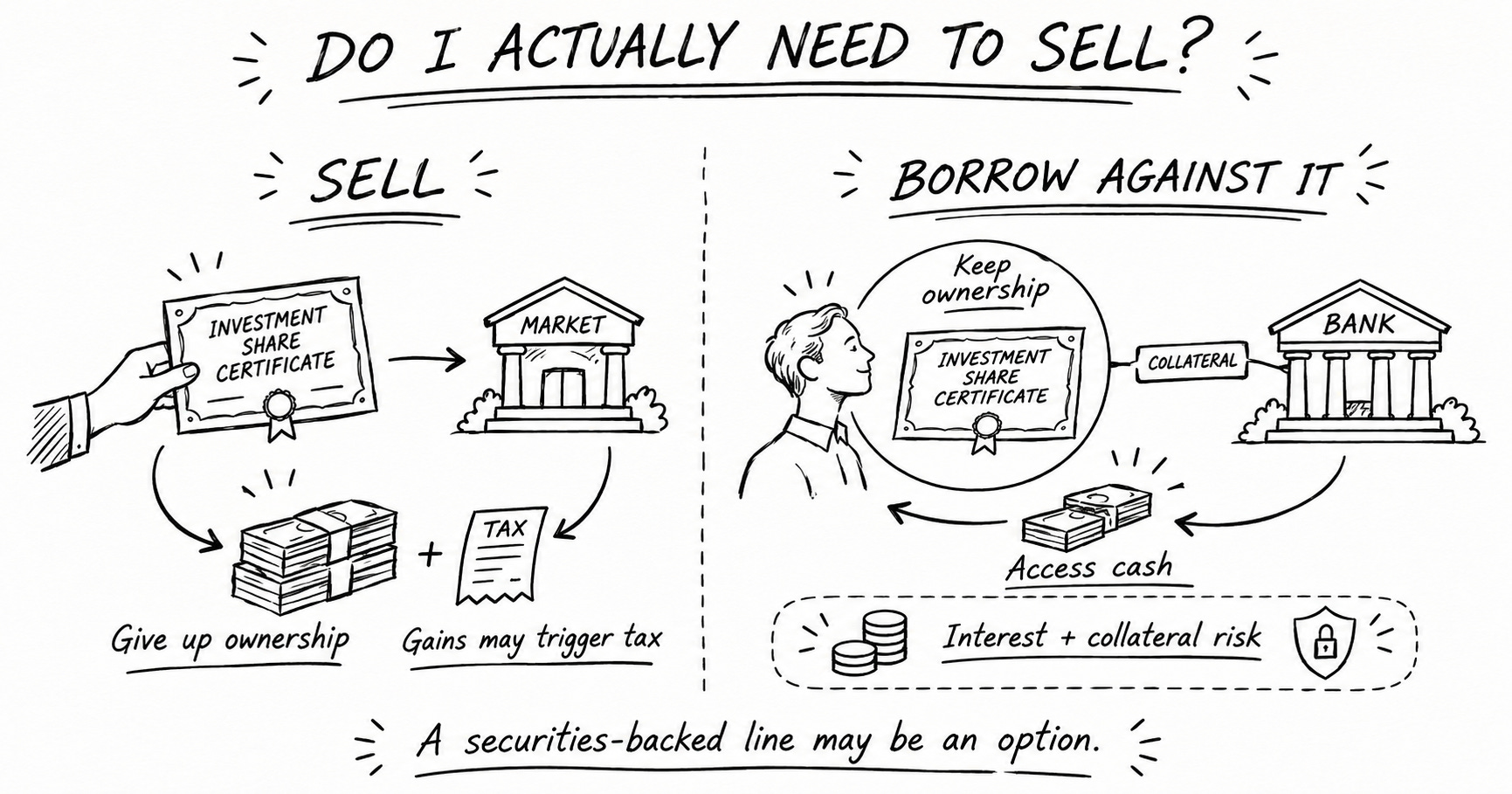
Borrowing gives you liquidity and keeps the ownership.
Let me give you an example.
Elon Musk needed $44 billion to buy Twitter.
Part of how he paid for it was borrowing against his Tesla shares. And the bank said yes to the loan because if he defaulted, they could take his stock.
And a loan isn’t income, so borrowing didn’t trigger a tax bill.
If he sold all his Tesla stock to be able to afford Twitter, this would have set off a capital gains bill bigger than most of us will ever make in a lifetime.
And so before you think about selling your own assets, ask yourself this one question:
Do I actually need to sell?
Or can I find another way to get access to cash like a securities-backed line?
A securities-backed line is a flexible loan that lets you borrow cash using your investment portfolio.
3/ Harvest losses before future gains.
A loss is worth more than the loss itself.
Let me explain.
Tax loss harvesting means you deliberately capture losses. And these losses can be carried forward until you die.
Here’s an example:
Let’s say you bought a share of Coke for $100. But then Coke falls in price to $70.
You then sell Coke and capture a $30 loss.
Now, you may say, “Sharran, why would you sell for a $30 loss? Shouldn’t you wait for it to go back up?”
No. Instead of waiting for it to go back up, I do two things:
I sell it and I capture the $30 loss.
I turn around and I buy Pepsi.
Coke and Pepsi trade similarly, so instead of waiting for Coke to go up… I can capture the loss here and then have Pepsi go up instead.
Which means I get the same exposure to the drinks market, but I’ve also captured the loss. And now I can keep that loss and use it against future gains.
Here’s how you can apply this:
Schedule a month-end review on your calendar.
You can’t sell Coke and buy Coke right back.
That’s called a wash sale, and the IRS won’t count the loss.
So wait more than 30 days to rebuy the same stock, or buy something similar right away, like Pepsi.
This is why you should write the date you sold each stock next to it and how much you lost, so you know when the 30 days are up.
4/ Put assets in the right location.
Asset location is four decisions, not one.
Let’s say you own a rental building through an LLC. You need to decide:
Where the LLC is formed: the state where you file the LLC paperwork.
Where the asset sits: the state the building is physically in.
Where the business operates: the state where your work happens.
Who owns it and who runs it: one company can own the building while a different one runs the business inside it.
For example, in my own estate planning session, I made a decision on question 1 that my kids’ trusts would go in South Dakota.
A trust is a legal container that holds assets for someone.
I’m forming their trusts in South Dakota instead of California, so they can last for generations, stay private, and for tax reasons.
This costs us roughly $5,000 to $10,000 a year per trust in fees. And I’m fine with it because I want my kids to be 50 and say: “I’m so glad Dad thought about this.”
I would much rather pay the extra operating fee now to give them that benefit later.
Now answer the four questions for your biggest asset.
5/ Separate assets and liabilities.
A legal entity is a separate company that owns assets and carries its own legal risk, like an LLC.
So if you put everything into the same entity… a problem with one asset can reach all the others.
For example, let’s say you own three rental buildings.
All three buildings sit in the same LLC and a tenant at one building sues you because they slipped in the pool.
Their lawsuit can reach all three of your buildings because all three buildings belong to the same company.
This is why you should give each building its own LLC, and the lawsuit may stop at the building that was sued.
And so each LLC becomes a legal wall around its own building. But this only works if each LLC is run as a legitimate, separate company.
So give each asset its own legal wall.
And you can start by doing these 3 things today:
Number one: Make a list of everything you own that carries risk, like rental properties or your business
Number two: Next to each one, write which entity owns it. Is it you personally, a specific LLC, or a company shared with other assets?
The goal here is to spot any asset that shares an entity with another.
Number three: Talk to your attorney.
An entity structure is a legal question, so the attorney decides whether the assets should be separated and how.
Bring this list of questions to them:
Which of these assets should be in their own entity?
Is there a holding company I can use?
What do I need to do to keep each entity as a separate company?
6/ Separate ownership from operations.
The entity that owns a valuable asset doesn’t have to be the one that carries the operating risk.
Here’s what I mean:
A real estate LLC can own the building, while an operating company can run the business inside it.
An asset company can own the equipment, and an operating company can use it.
Now this only works when there are real agreements, pricing, insurance, and accounting behind each entity.
The operating company signs a lease or usage agreement with the asset company:
And then they pay a fair price for it, and each entity carries its own insurance and keeps its own books.
But if the entities don’t act separately, a court can treat them as one.
7/ Turn large expenses into operations.
At a small scale, a company expense is a cost.
But on a much larger scale, an expense can become a business of its own.
For example, let’s say you have one van for a small company as an expense.
You pay for it and move on.
But if you have 10 vans and have a much bigger business, you can share them across several companies.
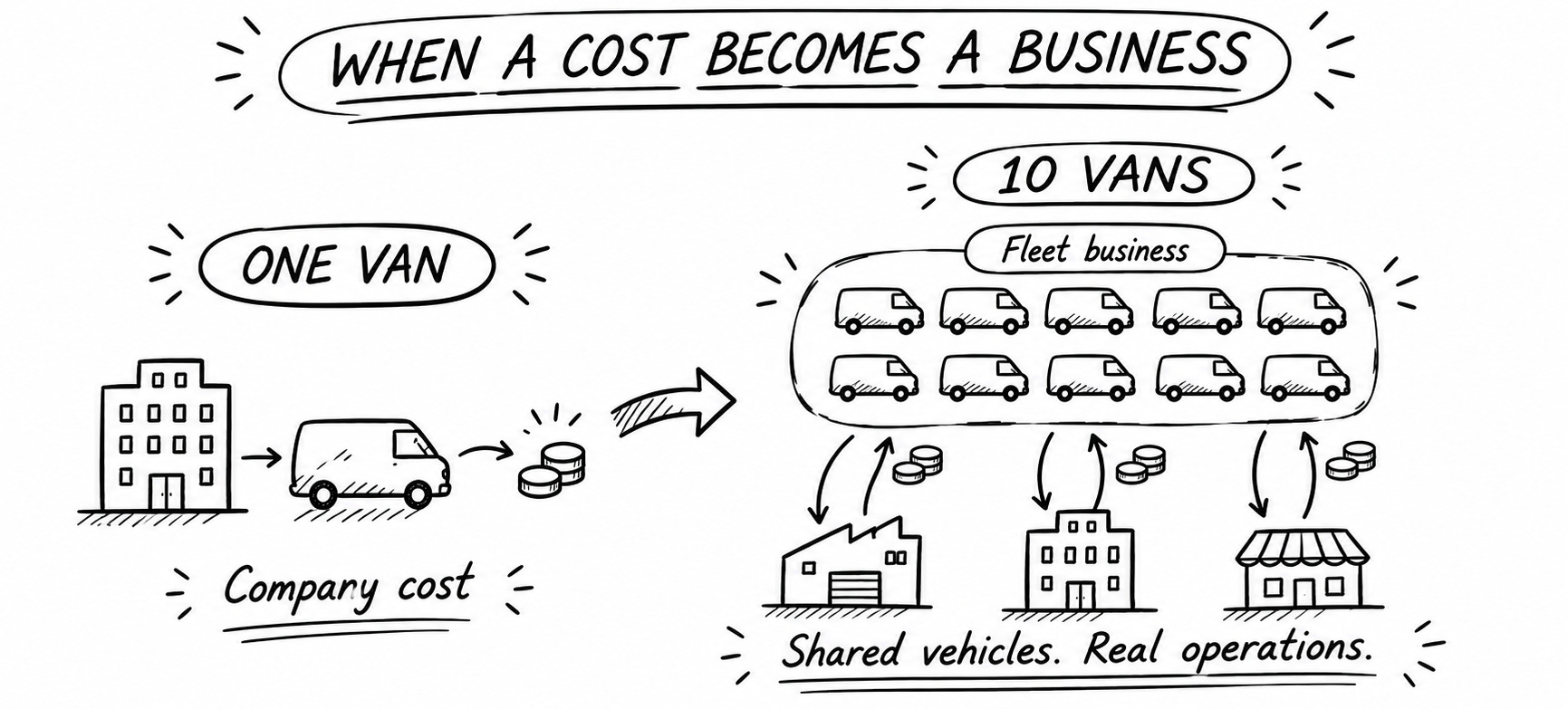
Someone still has to buy, service, and insure them. They still have to operate like a real business with all the paperwork.
At this point, it’s a fleet operation. Meaning it can run as its own business that charges the companies for using the vehicles.
Now if you’re at this level, here’s what you can do.
Book a call with a CPA or a business lawyer and bring these questions to them:
Does it make sense to set up a separate entity for this?
How should my companies charge each other so the pricing works?
What tax, sales tax and insurance issues come with doing this?
What records would you need from me to defend this if I were ever audited?
What’s the cheapest way for me to set this up and keep it compliant?
8/ Use legitimate business expenses.
Look for any costs that are already business expenses, and run them through the business accounts instead of your personal account.
The IRS test is whether an expense is ordinary and necessary for your business.
This just means it is common in your line of work and helpful to it.
Like an accountant who works from home could write off a laptop and other home office items.
But here’s the thing;
Your business doesn’t exist to create these deductions.
The deduction must follow a real expense, and never the other way around.
There are no tax loopholes, only the law.
My tax rule is simple:
Know the law.
Follow the rules.
Document the truth.
9/ Depreciate qualifying assets.
Depreciation is a tax deduction for any wear and tear of an asset.
And it’s spread over an asset’s lifespan. Depreciation applies to things like buildings, equipment, machinery and business vehicles.
Here’s the cool part:
Some assets can produce income and a deduction at the same time. Meaning one asset can be doing two jobs, and it sits in the tax code.
For example, let’s say you buy a rental building for $275,000 that earns $30,000 a year in rent.
And your costs like repairs, insurance, and interest, come to $12,000.
Without any depreciation, you’d pay tax on your $18,000 in profit.
But the tax code lets you deduct the building’s cost over 39 years for a commercial property.
So now when you do the math:
$275,000 ÷ 39 = about $7,050 a year.
Which means your taxable profit is down to about $10,950, even though you made $18,000 in cash.
This is how one asset can do two jobs: producing rent and creating a deduction.
10/ Reinvest cash flow into more ownership.
Most people have lazy cash sitting in their personal bank accounts and businesses.
Here’s the easiest way to understand lazy cash:
Imagine you have a business with 10 employees.
You walk in the door of the office and each of them is scrolling on TikTok instead of working.
When you have $10,000 in a bank account that isn’t doing anything, it’s just like those 10 employees.
This is why you need to give every surplus dollar a job.
You can take the cash flow from your business and buy an asset that pays you to own it.
This asset could be an ETF like VOO or a stock like Berkshire Hathaway.
Whatever you choose the goal is always to give every dollar you make a job.
I hope you can see that no single move on this list builds wealth on its own.
Once you own assets and businesses, you have more money and wealth decisions available than someone who doesn’t.
And the richest people I know make each of these decisions intentionally.
If you enjoyed this post, you’ll enjoy this next one where I explain 5 Money Algorithms I gave to Alex and Leila Hormozi:
If You Only Read One Wealth Article, Make It This

One of the first things I did when I met Alex and Leila Hormozi was to ask them this question:
P.S. I have taken 21 years of wealth knowledge and turned it into a personalized wealth roadmap that gives you actionable steps and tactics you can use to make yourself wealthy:
11th…What happens when you stop looking at tax avoidance and actually monetize the excess capacity already sitting on your balance sheet?
"Stacking smaller decisions made deliberately and held over long periods" is the whole game, and not just in investing. Most business owners I talk to are hunting for the one big launch when the real wealth is in the boring decisions they repeat every month. #3 is the sleeper here. A month-end review habit alone would change most people's finances. Which of the 10 would you have a small business owner start with first?