


It was 1803…
Two men were sent to Paris on a mission to buy America a city.
But they didn’t come back with a city… they came home with half a continent.
This deal only happened because of a secret strategy these two men used.
But without this strategy, America as you know it… would not exist…
And this strategy is something the history books and headlines have never published before that could help you buy a business for no money today.
To discover all the secrets behind the Louisiana deal, I break them all down in episode 4 of my show, Billion Dollar Deals.
So here are the secrets behind the Louisiana Purchase that you can use to buy a business for $0.
Now to understand this deal we need to go back to America in 1803.
At the time, America was far from the empire you see today.
It was just 17 states all arguing about what the government was allowed to do. And it had only been independent for 27 years.
President Thomas Jefferson and his government were brand new… every rule made was a first… and there was a power struggle over who made the decisions:
Jefferson or the individual states.
But towards the west of America, something was happening that the government couldn’t control…
A growing population of people was moving further into America.
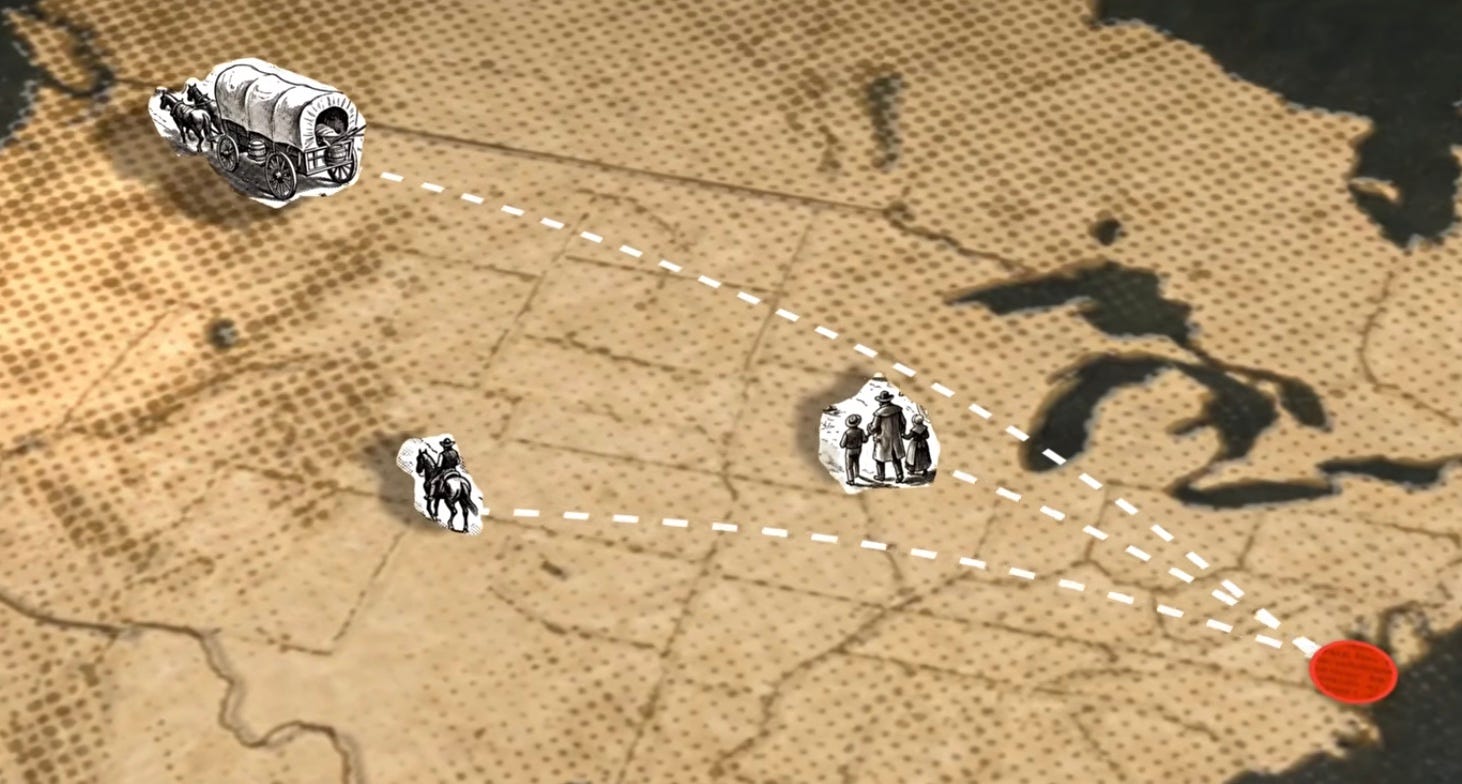
And they didn’t care what the politicians in Washington were debating.
But this growing population was producing food and goods with no easy way to sell them. They were completely disconnected from the rest of America.
This became a serious problem for the Jefferson government because of 3 reasons:
If the West couldn’t trade with the rest of the country… it had no reason to stay as part of America.
The West would follow whoever controlled the trade routes.
America would lose a massive part of its new and vulnerable country.
And so the people in the West started to follow the rivers…
They were heading for one city that was at the center of everything… New Orleans.
Because of its strategic position New Orleans was the future of American trade and the invisible trigger for this entire deal.
But there was just one problem…
America didn’t control New Orleans… France did.
Every grain. Every barrel. And every single dollar moved through New Orleans.
But France controlling New Orleans wasn’t just a political problem… it threatened the entire future of America.
Because France was a rising empire under Napoleon’s reign… he wanted to rebuild the French Empire in America.
This started to worry the new American government.
But Thomas Jefferson’s response to this new situation would make you think he was the coolest dude in America.
He didn’t panic or make a public scene. Instead, he sent two men to Paris with one mission:
To negotiate with Napoleon for the port of New Orleans.
These two men were Robert R. Livingston and James Monroe.
And Jefferson gave them a $10M budget to get New Orleans.
But Livingston and Monroe didn’t just come back with New Orleans…
They came home with something that would change history as we know it today… Louisiana.
You see, Napoleon was asset-rich but cash-poor. Meaning his land was worth millions, but he couldn’t spend land.
He couldn’t pay soldiers with miles and rivers. And he couldn’t fund wars with land he couldn’t even defend.
So he decided to sell New Orleans to America for an easy payday.
But he didn’t just sell New Orleans…
He sold America the whole of Louisiana.
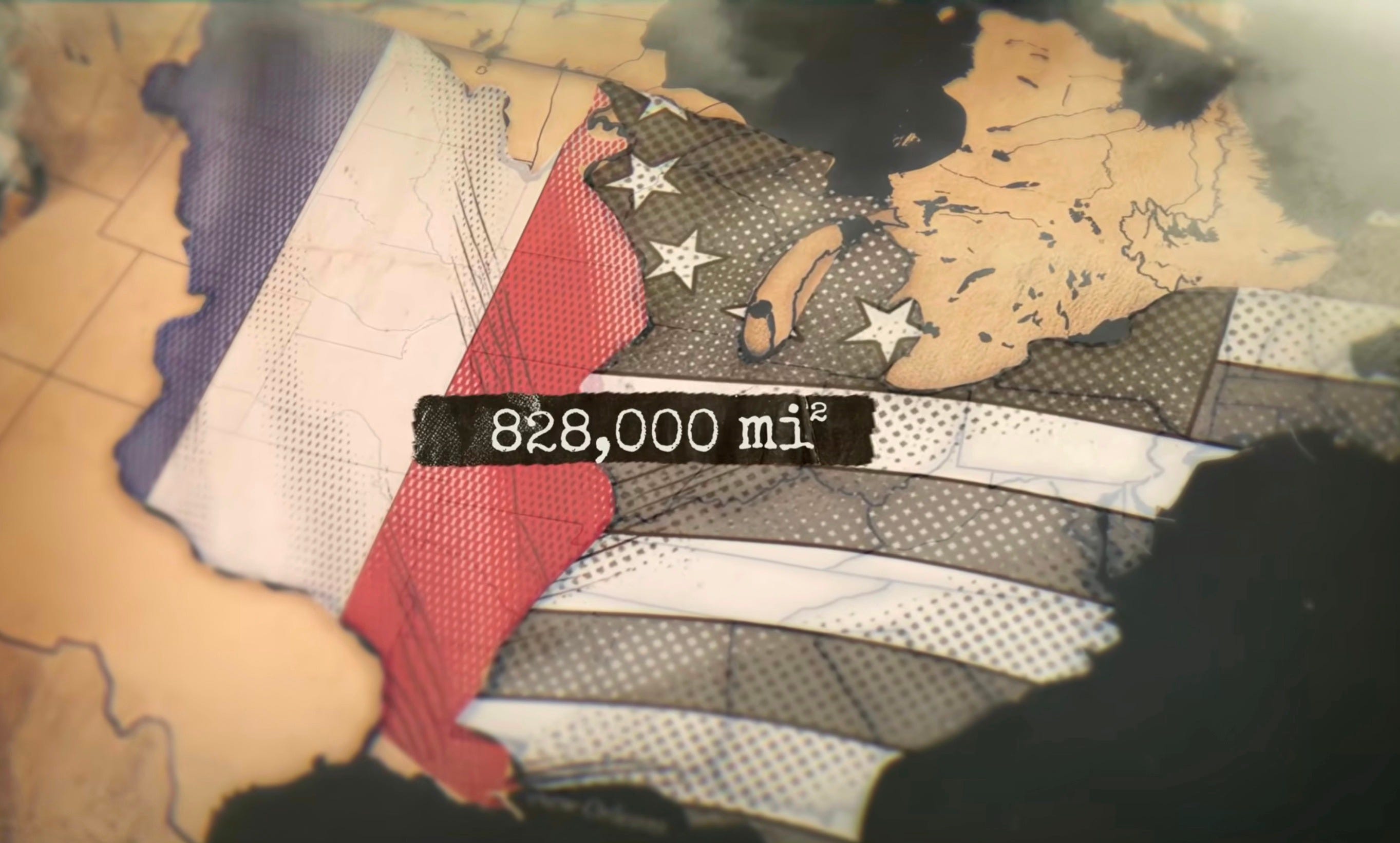
Napoleon’s French Treasury Minister, who controlled the money, sat down with Livingston and offered him all of Louisiana for $15 million.
But behind this signed deal, the politics, and the $15 million price tag is a secret deal strategy…
This strategy explains exactly how the deal that changed America forever was actually closed.
But for over 200 years, nobody has broken it down… until today.
And to understand exactly how it works, we need to use the third part of my Deal DNA: price and terms.
History still talks about the famous $15 million price tag that closed the deal.
But this $15 million price tag isn’t what America actually paid…
This price tag had a 4-part price chain that isn’t talked about in your history lessons.
Part 1: The agreed price of $15 million.
Part 2: $11.2 million of this $15 million wasn’t paid in cash… it was paid in government bonds.
This means America had basically made a pinky promise to buy the land that would double the size of the continent.
Part 3: Assumed liabilities from France.
France also had trade debts with the American government.
They already owed American merchants millions for ships and cargo seized at sea.
So America absorbed France’s debt and paid its merchants as part of the deal structure.
This is called assumed liabilities.
Part 4: The land.
When America asked France exactly what rivers, boundaries, and land they were buying… France didn’t tell them.
And this was deliberate.
Why?
Because it would waste more time when they wanted to close this deal as fast as possible.
But rather than let this border confusion block the deal, Monroe and Livingston accepted it…
They agreed to the deal that was in front of them.
But there was one factor in this deal that made sure it was finally closed.
And to find out exactly what this factor is… We need to use the final part of my Deal DNA: The X factor.
And the X-factor in this deal is what I call…
The Founders Fund.
It uses the same financing principles that businesses use in acquisitions today.
These are the same principles that you can use to buy a business without all the cash up front.
Here is how it works:
As you now know, America didn’t have enough cash to buy Louisiana outright.
So they borrowed the money from France to do it… this is called seller financing.
So how does this work?
If you, as the buyer, didn’t have all the money to buy the company… you would generally go to a bank and get a loan.
And in this case, the seller becomes the bank. So instead of making payments to the bank, you just make payments to the seller from the operating cash flow of the business.
So let’s say you wanted to buy a business. But you don’t have the money to buy it.
You could take out an SBA loan or a commercial bank loan.
This means the bank gives you the cash and you can use it to pay the seller.
Now, the banks will still underwrite the business to make the loan.
But this is actually a good thing for a few reasons:
The banks are in the business of lending money to do deals like this.
You still don’t pay any money out of pocket for the business.
And you can ideally just use the operating profits of the business you bought to cash flow the entire deal.
But this still leaves us with a few problems…
There will be situations where a seller won’t always want to seller finance.
And you, as the buyer, may not have the cash needed in order to buy the business.
So what do you do?
You don’t pay the seller.
Instead, you do 3 things:
You borrow from the bank
You repay the bank over the next 10-15 years
And this is often using the cash flow generated by the business you just bought.

So now you have multiple ways to buy a business for zero dollars out of pocket…
And so, this is why you don’t always need cash up front because you could combine different financing strategies to get the seller paid and buy the business that you want.
And this is exactly how the world’s biggest land deal ever was closed.
The same Founders Fund that built America… can be used by you… to buy and build a business for zero dollars up front.
Sir I’m only 1/4 of the way through and I must say this vector of business and history, especially seen through the vantage point of the leadership and the market populace is brilliant.
This could end up being a huge series.
Especially if you can toe the line at alluding to the current political climate using the past as a reference to understand how to move in the future.
Great Essay!