


I realized I was making a big mistake.
Like most of us, I was (unintentionally) keeping my work from my children. And because of that I found out that they made up their own stories about it.
Here is what I have learned… and let me start with some vulnerability.
When It All Changed For Me
For a long time, I worked behind closed doors.
I told myself I was protecting focus and protecting them... after all, they are just kids.
“5 more minutes,” I’d say, and then another 5.
They’d see me step out after a win and think work was only celebration. They’d see me step out after a loss and think work was only frustration.
Clearly both were incomplete pictures.
A few moments still sting…
The time my daughter slipped a note under the door asking, “Are you mad or just busy?”
The Saturday I said I’d play after I “finish one thing,” and the daylight was gone before I shut my laptop.
They rode their bikes by themselves.
They tried to play catch with each other.
They stopped the ice-cream truck without me.
It sucked.
I promised myself I would do better the next weekend, but it happened again and again.
Until, I understood the underlying reason:
I thought I was showing dedication.
What I actually showed was dumb separation.
That realization changed how I share work at home.
What I do now
Now I just bring them into my work.
I show my kids when I’m building a presentation.
I show them when I’m writing a Substack post. (now my son proofs my posts and reads my drafts).
I show them the videos I’ve made and the investments I’m evaluating.
They listen to calls when we’re driving.
At dinner, I tell them who I met with, what we discussed, and what I learned.
These moments are super simple.
They make the work visible.
They make it real.
I didn’t realize they also made it personal… because it was not about the work, it was actually about me.
I wanted them to understand what sits behind outcomes: the research, the drafts, the time, the skill, and the small corrections that add up. I wanted them to see a direct path of inputs to outputs so that then can have the confidence that anything is possible if they just did the work.
They don’t have to follow my path.
But just as I ask about their math homework, they can ask what I worked on today and know what it means.
Your Kids Are Smarter Than You Think
A few years ago, I remember taking my son to the bank one afternoon.
He was curious about what I was doing, so I handed him the deposit slip and asked him to fill it out. He signed his name carefully, walked up to the teller, and made the deposit himself.
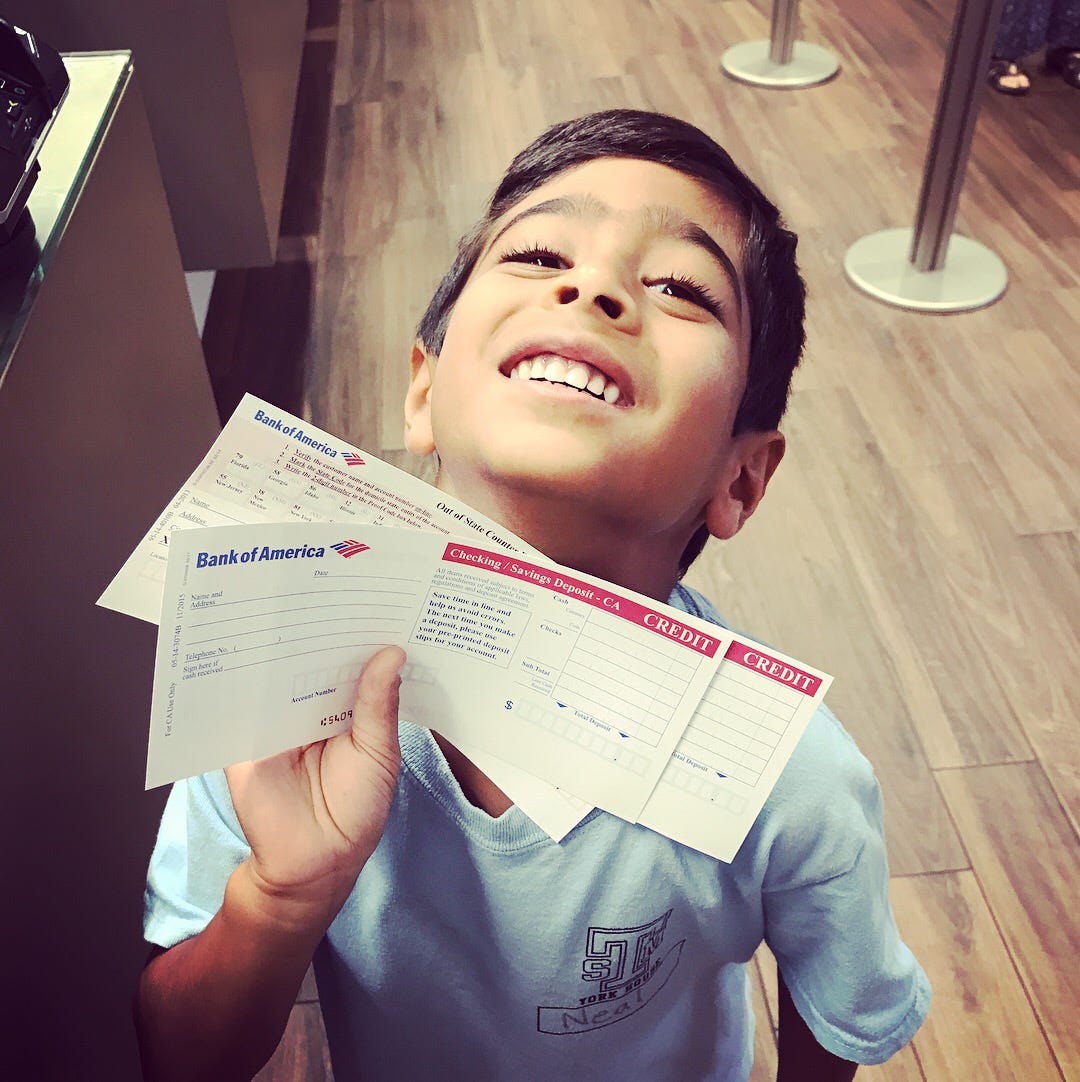
The next time we went, he understood what was happening. He started asking questions about how banks work, why people put money there, and whether he had an account of his own.
A few weeks later, he got $100 from his grandparents for his birthday.
He didn’t want to spend it on a game or a gift card.
He wanted to take it to the bank.
That small moment changed how he thought about money.
It became less about spending or saving and more about understanding what money can do and where it goes once you hand it over.
Kids grasp more than we realize when they’re part of the experience.
They don’t always need explanations.
Show them what a deposit slip looks like.
Show them how numbers turn into choices.
Show them the questions adults ask before they decide.
Every real-world moment is a class in how the world actually works. There is no reason for them to wait until they are 21 to learn the basics when you can show them how you do it.
In fact, when kids see it for themselves, they begin to form their own models for how things move, grow, and connect.
When you wonder if they’ll understand, remember that children everywhere adapt to whatever life puts in front of them.
They watch. They absorb. They try.
Dare I say they learn faster than we do, and are often better at it than we are.
The Open Door Apprenticeship
Here’s a simple structure that helps me teach my children:
Invite
“Hey, I’m reviewing a deal. Do you to see how I look at it?”
Name What’s Happening
“Listen for the questions I ask when I’m not sure.”
Debrief
“What did you notice about that conversation?”
Include
“Want to help me pick the image for this slide or tighten a sentence?”
Kids learn when they can observe a real process and ask questions about what they notice.
One day, when the world asks them to solve real problems, they’ll already know what real work feels like, sounds like, and requires… you are giving them a massive unfair advantage.
What I want for you (and for them)
I want your home to be a place where the act of working becomes part of how you connect.
Because you are going to work anyway, so might as well use it as a teaching construct.
This is where your kids see what it takes to build something meaningful.
They see you in your element
They see you work hard
They see you be kind
They see your work ethic
They see what it takes and understand its not about chillin’
We don’t get to keep every minute with them.
But we do get to shape the meaning of the minutes that we do spend with them.
Because at the end of the day:
Showing them your work, is showing them who you are. It’s a different side of you. But it’s still you. And the more they see of you, the more dimensionality it gives your relationship.
So: If you can ask them about what they did in math today, they should be able to ask you about what you did at work today.
Open the door.
Show them how you work.
You’d be amazed at how much it helps you… and how much it helps them.
If you liked this post, you’ll like this one too:

Other Popular Posts From The Week
Excellent. Thank you for sharing.
this is gold. thank you.